Hotels in Huzhou
Huzhou sits on the southern shore of Lake Tai in northern Zhejiang, threaded by canals that once carried its silk and tea trade. Its hotels range from lakeside resorts near the old town to hot-spring retreats around Changxing and hillside pools in the bamboo country of Anji, with the canal town of Nanxun a short drive from most of them.
Anyone searching for hotels in Huzhou is really choosing between three settings: the Lake Tai waterfront east of the old town, the hot-spring valleys around Changxing to the north, and the bamboo-covered hills of Anji to the south. Huzhou itself grew wealthy on silk and tea, wealthy enough that Lu Yu wrote his Classic of Tea while living on Miaoxi Hill here, and Nanxun's canal-side merchant houses still stand a short drive from the modern hotel district. Families tend to base near Nanxun for the water town and its boat rides, while travelers chasing a hot spring or an infinity pool over the hills usually head toward Changxing or Anji instead, where the pace slows and the resorts spread out.
Huzhou in numbers
 Spa / thermal pool
Narada Hot Spring Resort Huzhou
A focused hot-spring stay minutes from Lake Tai's tourism district
 Outdoor pool
Sheraton Huzhou Hot Spring Resort
Outdoor and indoor pools on the Lake Tai waterfront
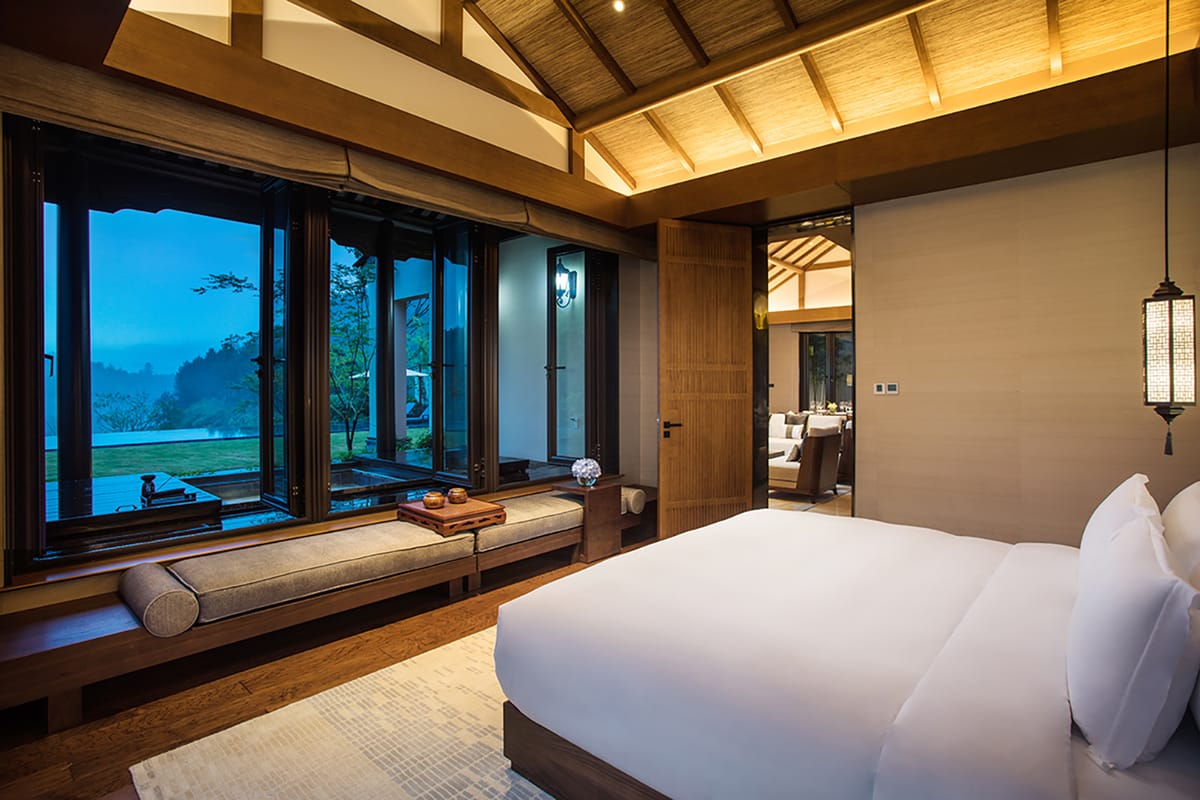 Infinity pool
Banyan Tree Anji
An infinity pool built into Anji's bamboo hillside
What to expect
- Lake Tai waterfront hotels east of the old town
- Hot-spring resorts around Changxing, about 40 minutes north
- Anji's bamboo hills for hillside pools, about an hour south
- Nanxun's canal water town, a half-day trip from most hotels
- Best visited in spring or autumn, ahead of summer humidity
Local tips
- Book a Lake Tai-facing room if the view matters, some hotels in the same building only face the parking side.
- Head to Changxing specifically for a hot-spring stay, Huzhou's own downtown hotels rarely have thermal pools of their own.
- Hire a car or a driver for Anji, the bamboo hills look close on a map but the mountain roads wind.
- Visit Nanxun in the morning before the tour buses arrive from Hangzhou and Shanghai on day trips.
- Pack for humidity between June and August, and a warmer layer for evenings if you're staying up in Anji.
- Ask whether your hotel's outdoor pool runs through winter, several close seasonally once the lake air turns cold.
Where to stay
FAQ
Where should you stay in Huzhou?
Most travelers base near Lake Tai east of the old town for waterfront hotels and easy access to downtown restaurants. If a hot-spring stay is the priority, Changxing to the north has the area's thermal resorts, while Anji to the south suits travelers who want bamboo-hill scenery alongside their pool, and each area adds meaningful driving time between them.
What is Huzhou known for?
Huzhou is known for its silk and tea history, Lu Yu wrote the Classic of Tea on Miaoxi Hill here, and for Nanxun, a canal town of nineteenth-century merchant houses now open to visitors. The wider prefecture also covers Anji's bamboo forests and Changxing's hot springs.
How far is Nanxun from central Huzhou?
Nanxun sits roughly 20 to 30 minutes by car from central Huzhou's hotel district, making it an easy half-day trip rather than an overnight stay. Most visitors treat it as a morning excursion before returning to Lake Tai or Changxing for the evening.
Is Huzhou worth visiting for a hot-spring trip?
Yes, the hot-spring resorts around Changxing draw travelers specifically for thermal pools rather than sightseeing, and several pair the springs with spa treatments and lake or hillside views. Book ahead in winter, when demand for heated outdoor pools rises sharply.
What is the best time of year to visit Huzhou?
Spring and autumn are the most comfortable, with mild temperatures for walking Nanxun's canals and touring Anji's bamboo hills. Summer brings the heavy humidity typical of the Lake Tai basin, which is when a hotel with a proper outdoor pool starts to matter most.
How do you get around Huzhou's different areas?
A car or a private driver is the practical option, since Lake Tai, Nanxun, Changxing and Anji are spread across the prefecture rather than clustered downtown. High-speed rail connects Huzhou to Hangzhou and Shanghai, but local transport between these areas runs by road, not rail.